A Repetitive Nerve Stimulation (RNS) Study is a specialized neurophysiological test used to evaluate disorders affecting the communication between nerves and muscles. This communication occurs at a junction known as the neuromuscular junction, where electrical signals from nerves trigger muscle contraction. When this transmission is impaired, muscles may become weak or fatigued easily. A Repetitive Nerve Stimulation Study helps assess how effectively these signals are transmitted during repeated stimulation.
Dr. Raghu Samala utilizes this advanced diagnostic test to identify neuromuscular junction disorders with accuracy. The study is commonly performed when conditions such as myasthenia gravis or other neuromuscular transmission disorders are suspected. It provides valuable insight into muscle fatigue patterns and helps guide targeted treatment strategies.
Abnormal results in a Repetitive Nerve Stimulation Study are typically associated with disorders that interfere with signal transmission at the neuromuscular junction. The most common condition evaluated with this test is myasthenia gravis, an autoimmune disorder in which the body produces antibodies that disrupt communication between nerves and muscles. Other causes may include Lambert-Eaton myasthenic syndrome, certain congenital neuromuscular disorders, and, in rare cases, toxin-related nerve dysfunction.
These conditions may arise due to autoimmune responses, underlying tumors affecting immune regulation, or inherited abnormalities. Identifying the specific cause is essential for selecting the appropriate therapy.
Patients who require a Repetitive Nerve Stimulation Study often experience fluctuating muscle weakness that worsens with activity and improves with rest. Common symptoms include drooping eyelids, double vision, difficulty speaking, trouble swallowing, facial weakness, and weakness in the arms or legs. In some cases, patients may notice rapid muscle fatigue during routine tasks.
Symptoms can vary in severity and may progress gradually. Because these disorders affect essential muscle groups, early evaluation is important to prevent complications.
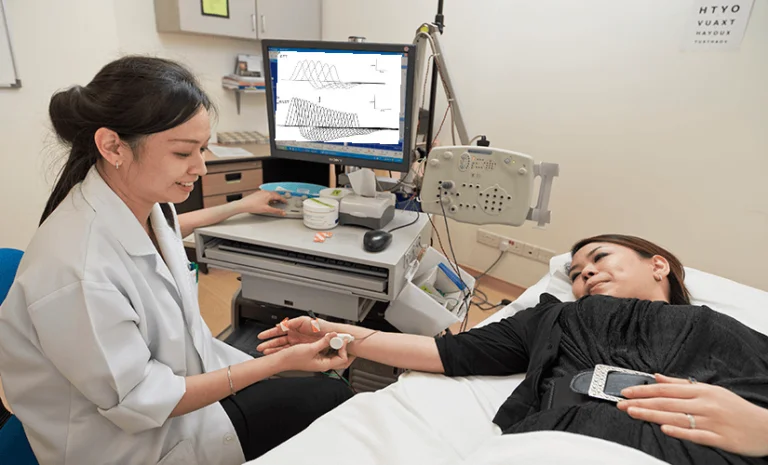
A series of small electrical impulses are delivered to the corresponding nerve at regular intervals. The muscle responses are recorded and analyzed to detect any decrease in signal strength over repeated stimulation. A progressive decline in response may indicate impaired neuromuscular transmission.
The procedure is generally well tolerated and is performed in a controlled clinical setting. Dr. Raghu Samala carefully interprets the results in conjunction with clinical findings, laboratory tests, and imaging studies when necessary. This comprehensive evaluation ensures accurate diagnosis and appropriate treatment planning.
Treatment depends on the underlying condition identified through the study. In cases such as myasthenia gravis, medications that improve neuromuscular transmission are often prescribed. Immunosuppressive therapy may be recommended when autoimmune mechanisms are involved. If an associated tumor is detected, surgical removal may be considered as part of the treatment plan.
For certain neuromuscular disorders, a combination of medications, supportive therapy, and rehabilitation may be necessary. Dr. Raghu Samala develops individualized treatment plans focused on restoring muscle strength, improving function, and enhancing quality of life.
Ongoing monitoring is essential to assess response to treatment and adjust therapy when required. Patients may be advised to follow medication schedules carefully, avoid excessive physical strain, and recognize early signs of worsening weakness. In some cases, periodic follow-up studies may be recommended to evaluate treatment effectiveness.
Lifestyle adjustments, including adequate rest and stress management, can significantly help in managing symptoms. Consistent medical supervision ensures optimal long-term outcomes.
A Repetitive Nerve Stimulation Study is considered safe and minimally invasive. Patients may experience mild discomfort during electrical stimulation, but this sensation is temporary. Serious complications are extremely rare when performed by an experienced specialist.
The greater concern lies in delayed diagnosis, as untreated neuromuscular disorders can lead to progressive weakness and, in severe cases, breathing difficulties.
You should seek medical evaluation if you experience unexplained muscle weakness that worsens with activity, drooping eyelids, difficulty swallowing, or rapid muscle fatigue. Symptoms that fluctuate throughout the day or interfere with daily activities require prompt attention.
Early assessment through a Repetitive Nerve Stimulation Study allows timely diagnosis and effective management. If you are experiencing neuromuscular symptoms, consultation with Dr. Raghu Samala can provide clarity, reassurance, and expert neurological care tailored to your condition.