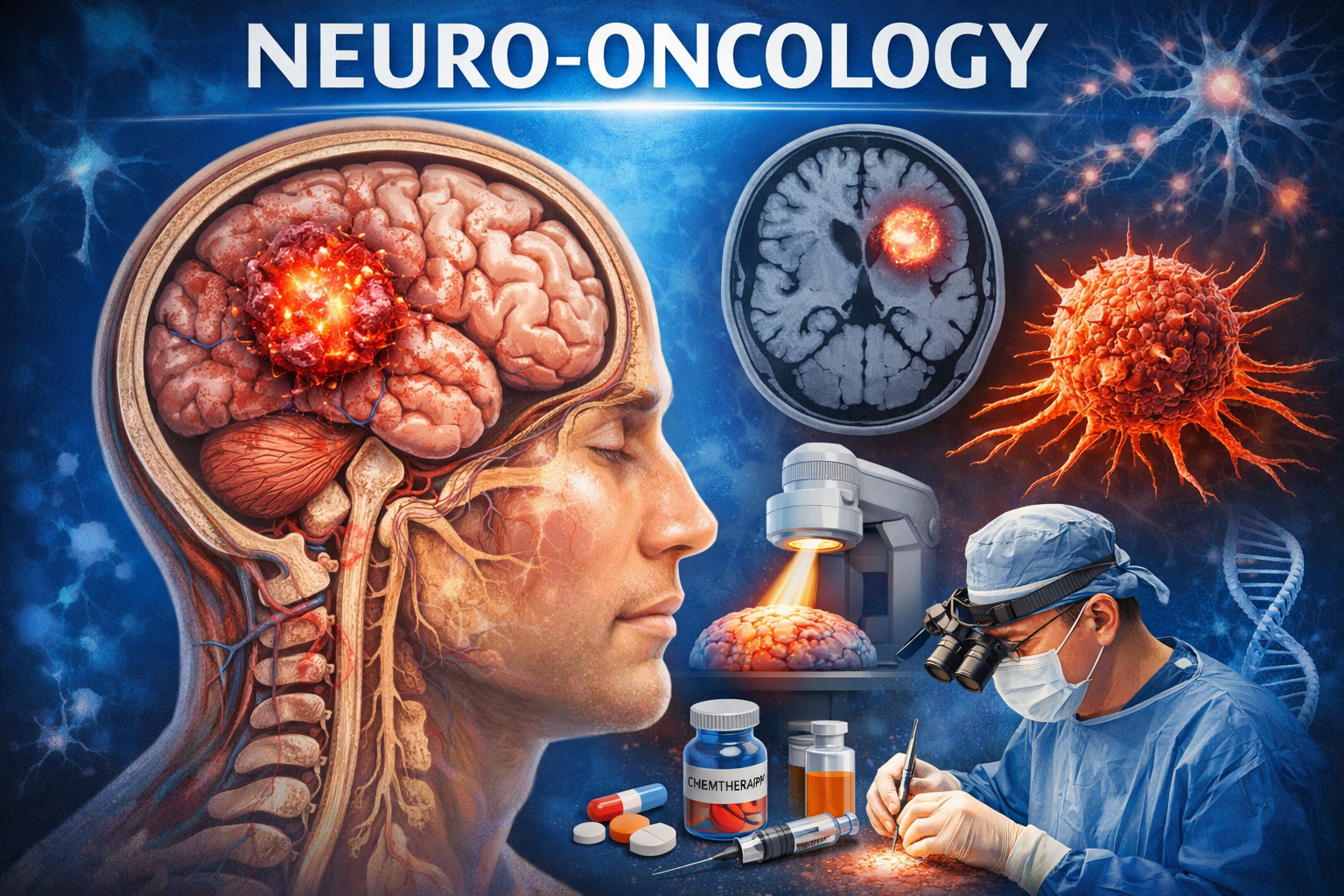
Neuro oncology is a specialized branch of medicine focused on the diagnosis and treatment of tumors affecting the brain, spinal cord, and peripheral nerves. These tumors may be primary, originating within the central nervous system, or secondary (metastatic), spreading from cancers elsewhere in the body. Brain and spinal tumors require highly specialized care due to their impact on critical neurological functions such as movement, speech, memory, and coordination. With advances in imaging, microsurgical techniques, and targeted therapies, many patients today benefit from safer procedures and improved outcomes. Under the expert care of Dr. Raghu Samala, patients receive comprehensive neuro-oncological evaluation and individualized treatment plans designed to achieve maximum tumor control while preserving neurological function and quality of life.
The exact cause of most brain and spinal tumors remains unclear. Certain genetic conditions, prior exposure to radiation therapy, and family history of tumors may increase risk in some individuals. Primary brain tumors develop from cells within the brain or its supporting tissues, while metastatic tumors occur when cancer cells spread from other organs such as the lungs, breast, kidney, or skin. Although many tumors arise without identifiable risk factors, early detection and prompt management significantly influence prognosis and recovery.
Symptoms of brain and spinal tumors vary depending on their size, location, and growth rate. Common signs include persistent or worsening headaches, seizures, nausea, vomiting, vision disturbances, balance problems, memory changes, or weakness in the limbs. Tumors affecting the spinal cord may cause back pain, numbness, difficulty walking, or bladder and bowel dysfunction. Some tumors grow slowly and produce subtle symptoms over time, while others progress rapidly. Any persistent or unexplained neurological symptom should be evaluated by a specialist.
Accurate diagnosis begins with a detailed neurological examination followed by advanced imaging studies. MRI scans are the gold standard for evaluating brain and spinal tumors, providing detailed information about tumor size, location, and surrounding tissue involvement. CT scans may be used in specific situations, especially in emergencies. In many cases, a biopsy is performed to determine the exact tumor type and grade, which guides treatment planning. Advanced diagnostic tools, including functional imaging and molecular testing, further help in tailoring personalized treatment strategies.
Treatment in neuro oncology is highly individualized and depends on the tumor type, grade, location, and overall health of the patient. Surgical removal is often the first line of treatment for accessible tumors, aiming to remove as much of the tumor as safely possible while preserving critical brain function. Advances in microsurgery, neuronavigation, and intraoperative monitoring have significantly improved surgical precision and safety.
In addition to surgery, patients may require radiation therapy, chemotherapy, targeted therapy, or immunotherapy depending on the tumor characteristics. For certain deep-seated or inoperable tumors, stereotactic radiosurgery offers a non-invasive alternative. A multidisciplinary approach involving neurosurgeons, oncologists, radiation specialists, and rehabilitation experts ensures comprehensive and coordinated care. Dr. Raghu Samala emphasizes evidence-based treatment combined with compassionate support throughout the patient’s journey.
Recovery following treatment for brain or spinal tumors involves regular follow-up visits and imaging studies to monitor for recurrence. Rehabilitation therapies such as physiotherapy, occupational therapy, and speech therapy may be recommended to restore function and independence. Emotional and psychological support also plays a crucial role in overall recovery. Long-term surveillance and lifestyle modifications help maintain neurological health and improve overall well-being.
Brain and spinal tumors can lead to complications such as neurological deficits, seizures, hydrocephalus, or tumor recurrence. Surgical and medical treatments, while generally safe, may carry risks including infection, bleeding, or temporary neurological changes. Early intervention, careful planning, and expert surgical techniques significantly reduce these risks. Continuous monitoring ensures that any complications are identified and managed promptly.
You should seek medical attention if you experience persistent headaches, new-onset seizures, unexplained weakness, difficulty speaking, vision changes, or progressive back pain accompanied by neurological symptoms. Early consultation allows timely diagnosis and improves treatment outcomes. If you or a loved one has concerns regarding a brain or spinal tumor, scheduling an evaluation with Dr. Raghu Samala ensures expert assessment, clear guidance, and personalized neuro-oncological care.