Magnetic Resonance Imaging (MRI) is an advanced diagnostic imaging technique that uses strong magnetic fields and radio waves to produce highly detailed images of the brain, spine, and nervous system. Unlike CT scans, MRI does not use radiation and provides superior visualization of soft tissues, nerves, intervertebral discs, and brain structures. It is one of the most precise tools available for diagnosing complex neurological and spinal conditions.
Dr. Raghu Samala utilizes MRI scanning as a cornerstone of neurosurgical evaluation. The detailed images obtained through MRI allow accurate identification of tumors, disc problems, nerve compression, stroke, infections, and degenerative diseases. This precision ensures that treatment decisions are based on clear, comprehensive imaging findings.
An MRI scan may be recommended for patients experiencing persistent headaches, seizures, weakness, numbness, back or neck pain, suspected brain or spinal tumors, or unexplained neurological symptoms. It is also frequently used to evaluate conditions such as slipped discs, spinal cord compression, multiple sclerosis, and vascular abnormalities.
In many cases, MRI is ordered when symptoms persist despite initial treatment or when more detailed imaging is required beyond standard X-rays or CT scans. Its ability to detect subtle changes makes it especially valuable in early diagnosis
Patients who undergo MRI evaluation often report symptoms such as chronic neck or back pain, radiating pain into the arms or legs, numbness, tingling, muscle weakness, balance disturbances, vision problems, or persistent headaches. Sudden neurological changes, including difficulty speaking or coordination issues, may also require urgent MRI assessment.
Because neurological symptoms can have multiple causes, detailed imaging helps pinpoint the exact source of the problem and guides appropriate intervention.
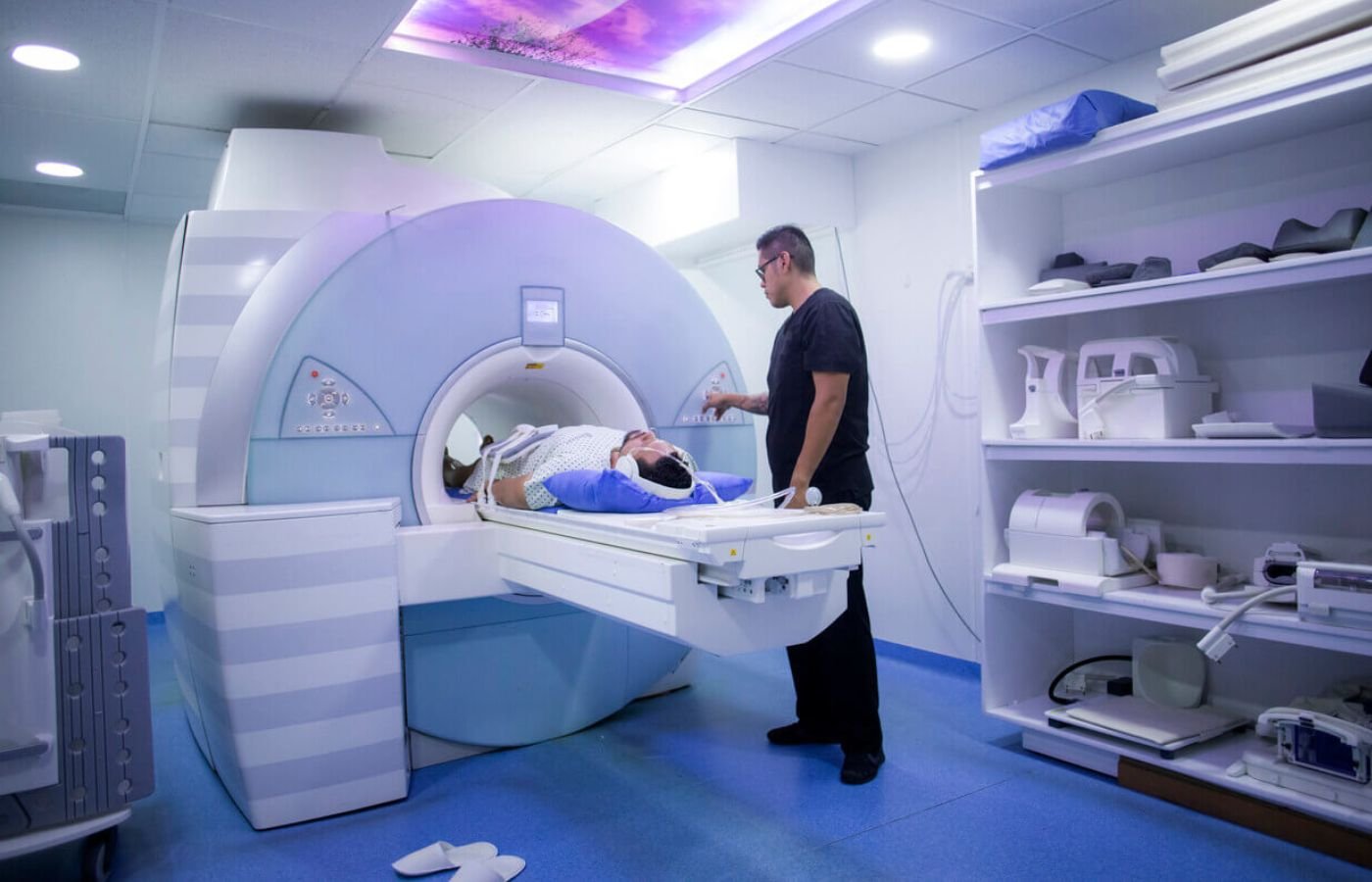
During an MRI scan, the patient lies on a table that slides into a cylindrical machine. The scanner uses magnetic fields to generate high-resolution images of the targeted area. In certain cases, a contrast agent may be administered intravenously to enhance visualization of blood vessels or abnormal tissue.
The procedure is painless, though it may require the patient to remain still for 20 to 45 minutes. Dr. Raghu Samala carefully interprets MRI images to identify structural abnormalities, inflammation, tumors, disc herniation, nerve compression, or vascular changes. The clarity of MRI imaging allows for accurate diagnosis and detailed surgical planning when necessary.
MRI itself is a diagnostic tool, but the information it provides directly influences treatment decisions. Depending on the findings, treatment may include medication, physiotherapy, minimally invasive procedures, or surgical intervention. For spinal disc problems, conservative management may be sufficient in early stages, while advanced compression may require surgical decompression.
For brain tumors, vascular malformations, or complex neurological disorders, MRI findings enable precise surgical planning and safer outcomes. Dr. Raghu Samala tailors each treatment plan based on imaging results, clinical evaluation, and the patient’s overall health.
After treatment, follow-up MRI scans may be recommended to monitor healing, track tumor response, or assess disease progression. Patients are encouraged to attend scheduled follow-up appointments and report any new or worsening symptoms promptly.
Maintaining prescribed therapy, engaging in rehabilitation programs, and adhering to lifestyle recommendations contribute significantly to long-term recovery and neurological stability.
MRI is a safe and non-invasive imaging modality that does not involve radiation exposure. However, patients with certain implanted medical devices, such as pacemakers or metal implants, must inform their doctor before the scan. In rare cases, mild reactions to contrast agents may occur.
Overall, MRI is considered one of the safest and most effective diagnostic tools in modern neurosurgical practice.
You should seek medical consultation if you experience persistent headaches, chronic back or neck pain, numbness, weakness, seizures, or sudden neurological symptoms. Early imaging is especially important when symptoms are progressive or interfere with daily life.
An MRI scan provides detailed insight into neurological conditions and supports accurate diagnosis and effective treatment planning. If you are experiencing concerning symptoms, consultation with Dr. Raghu Samala ensures comprehensive evaluation and expert neurosurgical care.