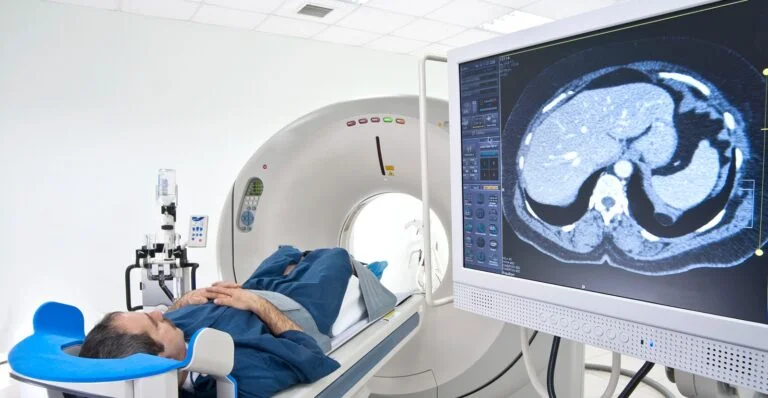
A CT Scan, also known as Computed Tomography, is an advanced imaging technique that uses X-rays and computer technology to create detailed cross-sectional images of the brain, spine, and other parts of the body. Unlike a standard X-ray, a CT scan provides highly detailed images of bones, blood vessels, and soft tissues, allowing accurate diagnosis of a wide range of neurological conditions. It is one of the most commonly used and reliable diagnostic tools in neurosurgical practice.
Dr. Raghu Samala uses CT scanning to quickly and precisely evaluate head injuries, brain hemorrhages, spinal fractures, tumors, infections, and other neurological emergencies. The test is fast, widely available, and particularly valuable in urgent situations where rapid diagnosis is essential.
A CT scan may be recommended for patients experiencing head trauma, severe headaches, sudden neurological symptoms, seizures, stroke-like symptoms, or suspected brain or spinal abnormalities. It is frequently performed after accidents to detect bleeding, fractures, or swelling within the brain.
In addition, CT scans are used to evaluate suspected tumors, hydrocephalus, congenital abnormalities, and spinal conditions. The imaging helps determine the extent and exact location of abnormalities, guiding further treatment decisions.
Patients who may require a CT scan often present with symptoms such as persistent or severe headaches, sudden weakness or numbness, confusion, loss of consciousness, seizures, vomiting, vision disturbances, or unexplained neurological deficits. In cases of trauma, even mild symptoms may require imaging to rule out internal bleeding or structural injury.
Early imaging is especially important when symptoms develop suddenly or worsen rapidly, as timely diagnosis can be life-saving.
During a CT scan, the patient lies on a motorized table that moves through a circular scanner. The machine rotates around the body, capturing multiple images that are processed into detailed cross-sectional views. In some cases, a contrast dye may be administered intravenously to enhance visualization of blood vessels or certain tissues.
The procedure is painless and typically completed within a few minutes. Dr. Raghu Samala carefully reviews the images to identify abnormalities such as bleeding, tumors, fractures, swelling, or structural changes. CT findings often guide immediate medical or surgical management.
While a CT scan itself is a diagnostic tool and not a treatment, the results play a crucial role in determining the appropriate course of action. If bleeding or swelling is detected, emergency medical or surgical intervention may be required. Tumors or structural abnormalities may necessitate further evaluation with MRI or surgical planning.
In cases of stroke, CT imaging helps distinguish between ischemic and hemorrhagic stroke, ensuring accurate and timely treatment. Dr. Raghu Samala develops a personalized treatment plan based on the imaging findings and the patient’s overall condition.
Following diagnosis and treatment, follow-up imaging may be recommended to monitor recovery or disease progression. Patients who receive contrast dye are advised to stay well hydrated to help eliminate it from the body. Ongoing neurological evaluations ensure that healing is progressing appropriately.
Adhering to prescribed medications, attending follow-up appointments, and reporting any new or worsening symptoms are essential parts of post-treatment care.
CT scans involve exposure to a small amount of radiation. While the radiation dose is generally considered safe, imaging is recommended only when medically necessary. In rare cases, patients may experience an allergic reaction to contrast dye. These reactions are uncommon and are carefully monitored during the procedure.
The benefits of accurate and timely diagnosis typically far outweigh the minimal risks associated with the scan.
You should seek immediate medical attention if you experience sudden severe headache, head injury, loss of consciousness, seizures, weakness, speech difficulty, or signs of stroke. Persistent neurological symptoms should also be evaluated promptly.
A CT scan provides rapid and accurate imaging that can be critical in diagnosing serious neurological conditions. If you are experiencing concerning symptoms, consultation with Dr. Raghu Samala ensures expert evaluation, timely diagnosis, and appropriate neurosurgical care.