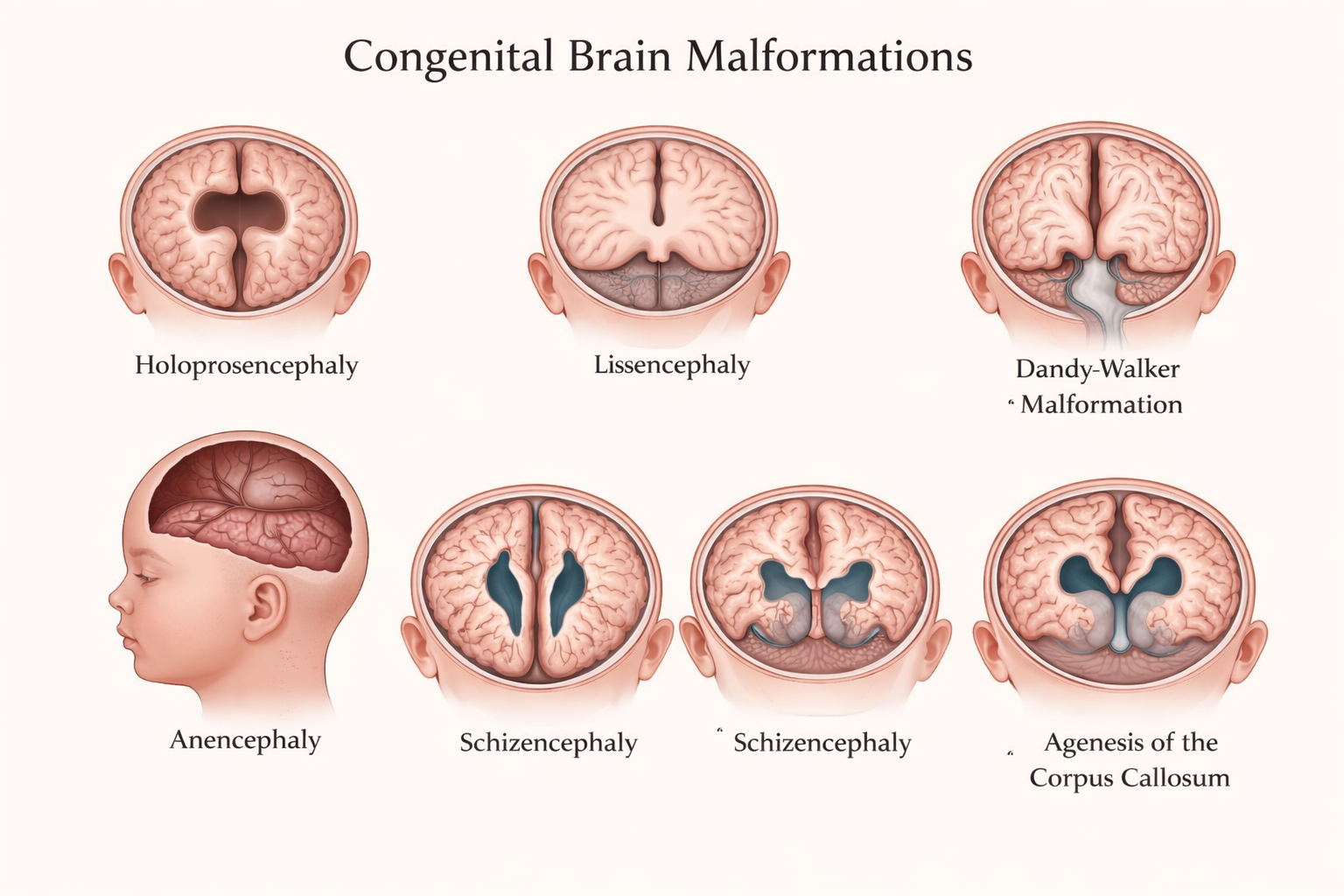
Congenital malformations of the brain and spine are structural abnormalities that develop during fetal growth and are present at birth. These conditions occur due to disturbances in the normal formation of the nervous system during early pregnancy. Some congenital malformations are mild and may not cause noticeable symptoms, while others can significantly affect neurological function and overall development. Early diagnosis and specialized neurosurgical care play a crucial role in improving long-term outcomes. Under the expert guidance of Dr. Raghu Samala, patients receive comprehensive evaluation and individualized treatment plans designed to ensure the best possible quality of life.
Congenital malformations arise from complex interactions between genetic and environmental factors. In some cases, genetic mutations or inherited conditions may influence abnormal development of the brain or spinal cord. Environmental factors such as maternal infections, uncontrolled diabetes, nutritional deficiencies—particularly folic acid deficiency—exposure to certain medications, or toxin exposure during pregnancy can also contribute. Often, no single identifiable cause is found. These developmental changes usually occur within the first few weeks of pregnancy, when the neural tube is forming, making early prenatal care essential.
The symptoms of congenital brain and spinal malformations vary widely depending on the type and severity of the condition. Some infants may present with visible abnormalities such as swelling on the back, an abnormally shaped head, or spinal curvature. Others may develop developmental delays, seizures, muscle weakness, difficulty walking, feeding problems, or bladder and bowel dysfunction. In certain cases, symptoms may not become apparent until later in childhood as growth and neurological development progress. Early recognition of developmental concerns allows timely medical intervention.
Advances in medical imaging have significantly improved the early detection of congenital malformations. Many conditions can be identified during pregnancy through detailed ultrasound examinations and fetal MRI. After birth, imaging studies such as MRI and CT scans provide precise information about the structure of the brain and spinal cord. A thorough neurological examination and developmental assessment help determine functional impact. In some cases, genetic testing may be recommended to understand underlying causes and guide family counseling.
Treatment for congenital malformations depends on the specific diagnosis, severity, and associated symptoms. Some mild conditions may require careful monitoring without immediate intervention. Others may need medical management, rehabilitation therapies, or surgical correction. Neurosurgical procedures may be performed to repair structural defects, relieve pressure on the brain or spinal cord, correct spinal deformities, or improve cerebrospinal fluid flow. Early surgical intervention in selected cases can prevent complications and support normal development. Dr. Raghu Samala emphasizes a multidisciplinary approach, working closely with pediatricians, neurologists, and rehabilitation specialists to provide holistic care.
Ongoing follow-up is essential for children and adults with congenital neurological conditions. Rehabilitation therapies, including physiotherapy, occupational therapy, and speech therapy, may be necessary to enhance functional independence. Regular imaging and neurological evaluations help monitor growth, development, and any potential complications. Family education and support are integral components of care, ensuring that parents understand the condition and participate actively in the treatment plan.
If left untreated, certain congenital malformations can lead to progressive neurological deficits, developmental delays, chronic pain, seizures, or mobility challenges. Complications such as hydrocephalus, infections, or spinal instability may also arise in some cases. Early diagnosis and appropriate management significantly reduce these risks and improve long-term neurological outcomes. With modern neurosurgical techniques and comprehensive care, many individuals can achieve meaningful improvements in function and quality of life.
Parents should seek medical evaluation if a child shows delayed developmental milestones, persistent weakness, abnormal head growth, seizures, difficulty walking, or bladder and bowel problems. Prenatal consultations are recommended if abnormalities are detected during routine pregnancy scans. Early assessment by a qualified neurosurgeon ensures timely diagnosis and appropriate intervention. If you have concerns about congenital brain or spinal conditions, consulting Dr. Raghu Samala can provide clarity, expert guidance, and compassionate care tailored to your child’s needs.