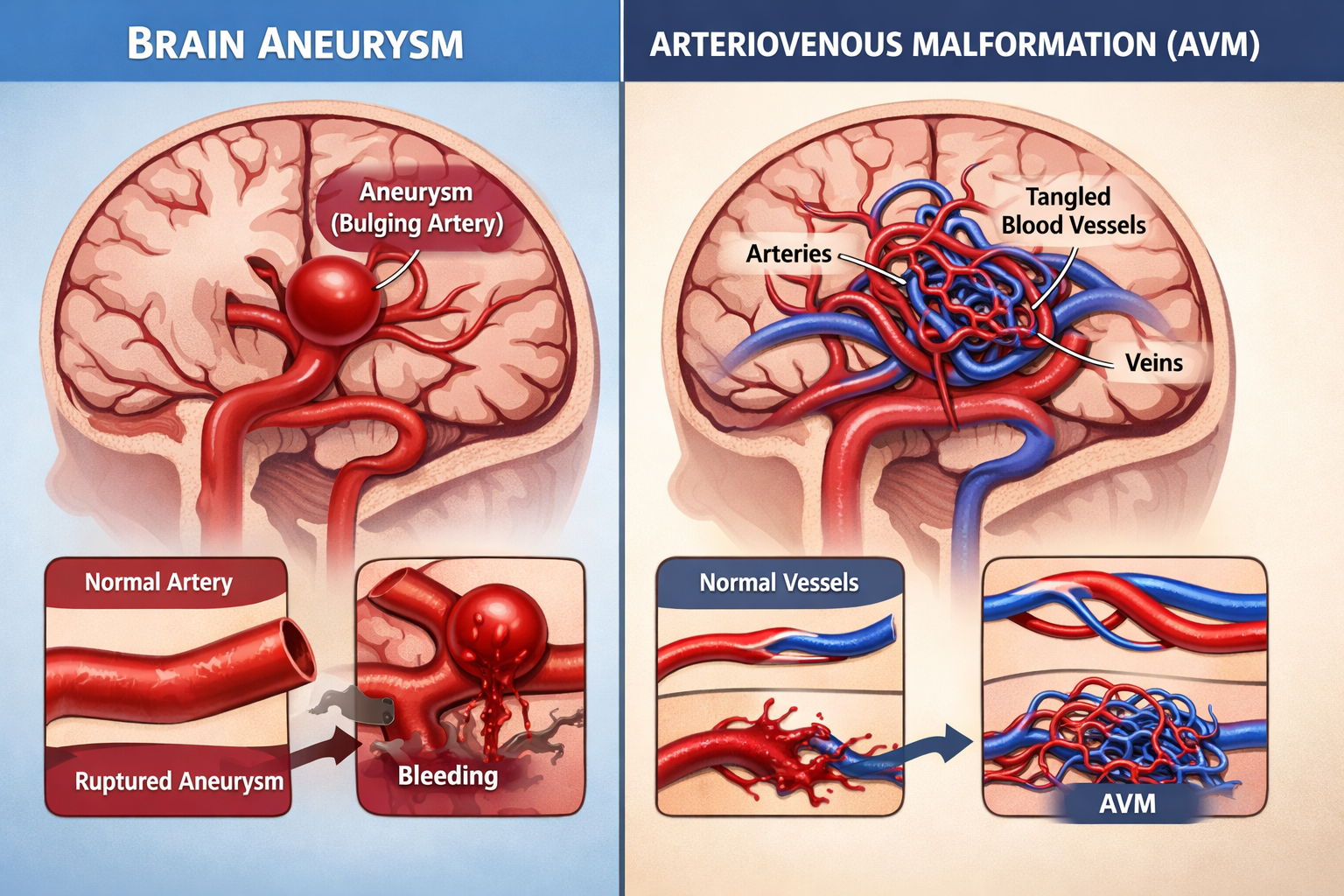
Brain aneurysms and arteriovenous malformations (AVMs) are serious vascular conditions affecting the blood vessels of the brain. A brain aneurysm is a weakened area in the wall of an artery that causes it to bulge or balloon outward. If the aneurysm ruptures, it can lead to a life-threatening type of stroke known as a subarachnoid hemorrhage. An arteriovenous malformation, on the other hand, is an abnormal tangle of blood vessels where arteries connect directly to veins without the normal capillary network in between. This disrupts normal blood flow and may increase the risk of bleeding in the brain. Early diagnosis and expert neurosurgical care are critical in managing these complex conditions. Under the experienced guidance of Dr. Raghu Samala, patients receive advanced evaluation and individualized treatment strategies aimed at protecting brain function and preventing complications.
Brain aneurysms often develop due to weakness in the arterial wall, which may be present from birth or develop over time. Risk factors include high blood pressure, smoking, family history of aneurysms, head injury, and certain connective tissue disorders. AVMs are typically congenital, meaning they are present at birth, although symptoms may not appear until later in life. The exact cause of AVMs is not fully understood, but they are believed to result from abnormal blood vessel development during fetal growth. While both conditions involve abnormal blood vessels, their structure and progression differ significantly.
Many brain aneurysms remain silent and cause no symptoms until they enlarge or rupture. An unruptured aneurysm may cause headaches, vision problems, facial pain, or difficulty with eye movements if it presses on nearby nerves. A ruptured aneurysm typically presents with a sudden, severe headache often described as the “worst headache of life,” along with nausea, vomiting, neck stiffness, sensitivity to light, and possible loss of consciousness.
Symptoms of an AVM depend on its size and location. Some individuals experience seizures, chronic headaches, weakness or numbness in one part of the body, or difficulty speaking. In some cases, the first sign of an AVM is a sudden brain hemorrhage, which may lead to stroke-like symptoms. Prompt medical attention is essential if any of these warning signs occur.
Accurate diagnosis of brain aneurysms and AVMs requires detailed neurological evaluation and advanced imaging studies. CT scans and MRI scans help identify bleeding or structural abnormalities in the brain. CT angiography (CTA) and MR angiography (MRA) provide detailed images of blood vessels. In certain cases, digital subtraction angiography (DSA) is performed for precise visualization of the vascular anatomy. Early and accurate imaging allows the neurosurgeon to determine the size, location, and risk profile of the lesion, guiding the most appropriate treatment plan.
Treatment depends on factors such as the size, location, and risk of rupture, as well as the patient’s age and overall health. Small, unruptured aneurysms may be monitored with regular imaging and strict control of blood pressure and lifestyle risk factors. Larger or high-risk aneurysms may require surgical clipping or endovascular coiling to prevent rupture.
For AVMs, treatment options include microsurgical removal, endovascular embolization to block abnormal blood vessels, or stereotactic radiosurgery to gradually shrink the malformation. In some cases, a combination of these approaches is used. The goal of treatment is to eliminate or reduce the risk of bleeding while preserving normal brain function. Dr. Raghu Samala provides personalized treatment strategies using modern neurosurgical and minimally invasive techniques to ensure optimal outcomes.
After treatment, careful monitoring and follow-up imaging are essential to ensure complete resolution and detect any recurrence. Patients may require rehabilitation therapies if neurological deficits were present before or after treatment. Blood pressure control, smoking cessation, and healthy lifestyle modifications are crucial in reducing future vascular risks. Regular neurological evaluations help maintain long-term brain health and functional recovery.
If left untreated, both brain aneurysms and AVMs carry the risk of brain hemorrhage, which can result in stroke, permanent neurological deficits, or even death. Ruptured aneurysms may cause significant brain swelling and complications such as hydrocephalus or vasospasm. AVMs can also lead to progressive neurological symptoms due to chronic blood flow abnormalities. Early diagnosis and expert intervention significantly reduce these risks and improve survival and quality of life.
Immediate medical attention is required if you experience a sudden, severe headache, seizures, weakness on one side of the body, difficulty speaking, or loss of consciousness. Individuals with a family history of brain aneurysm or unexplained neurological symptoms should consider medical evaluation. Early consultation with an experienced neurosurgeon such as Dr. Raghu Samala ensures timely diagnosis, appropriate treatment planning, and comprehensive care tailored to your specific condition.