Neurovascular surgery is a highly specialized field of neurosurgery focused on the diagnosis and treatment of disorders affecting the blood vessels of the brain and spinal cord. These conditions can interfere with normal blood flow, increase the risk of stroke, or lead to life-threatening brain hemorrhage if left untreated. Neurovascular disorders require advanced imaging, precise surgical planning, and expert technical skills to ensure safe and effective treatment. With modern microsurgical techniques and minimally invasive endovascular approaches, many complex vascular conditions can now be managed with improved safety and outcomes. Under the experienced care of Dr. Raghu Samala, patients receive comprehensive evaluation and personalized treatment plans aimed at preserving neurological function and preventing serious complications.
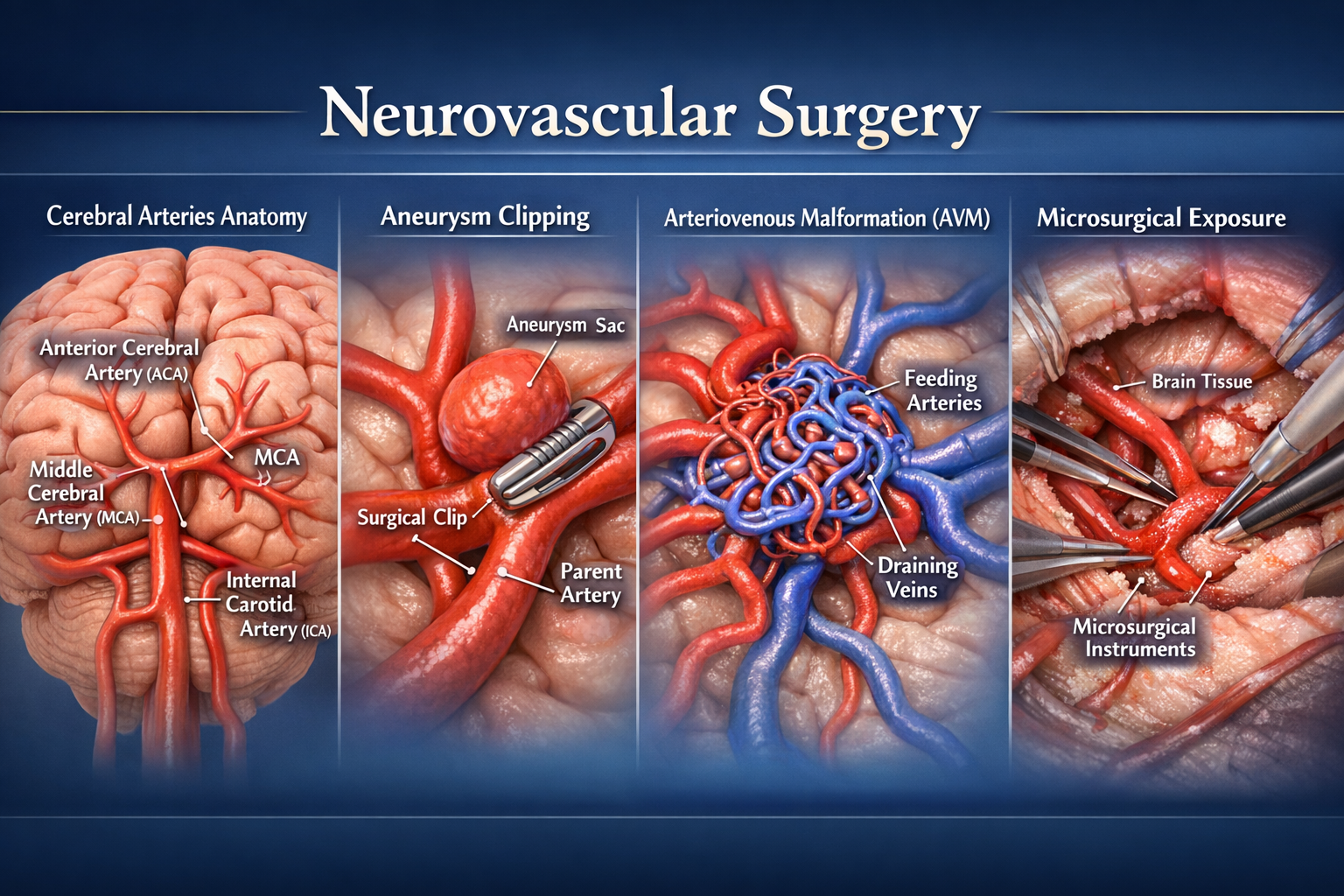
Neurovascular conditions may arise from structural abnormalities in blood vessels, weakness in arterial walls, congenital malformations, or acquired risk factors such as high blood pressure, smoking, diabetes, and atherosclerosis. Some disorders, including aneurysms and arteriovenous malformations, may be present from birth but remain undetected until symptoms develop. Others, such as carotid artery disease or vascular narrowing, may progress gradually over time. Trauma and certain infections can also contribute to vascular injury within the brain or spine.
Symptoms of neurovascular disorders vary depending on the type and location of the condition. Common warning signs include sudden severe headache, dizziness, weakness or numbness on one side of the body, difficulty speaking, vision disturbances, or loss of balance. In cases of bleeding in the brain, patients may experience nausea, vomiting, neck stiffness, seizures, or sudden loss of consciousness. Some vascular abnormalities may remain silent until they rupture or cause a stroke. Any sudden neurological symptom should be treated as a medical emergency.
Accurate diagnosis is essential in neurovascular surgery. A detailed neurological examination is followed by advanced imaging studies to evaluate blood vessel structure and blood flow. CT scans and MRI scans help detect bleeding or structural abnormalities. CT angiography (CTA), MR angiography (MRA), and digital subtraction angiography (DSA) provide detailed images of the brain’s vascular network. These diagnostic tools allow precise identification of aneurysms, vascular malformations, stenosis, or other abnormalities, enabling careful treatment planning.
Treatment depends on the specific neurovascular condition, its size, location, and the patient’s overall health. Options may include microsurgical clipping of aneurysms, endovascular coiling or stenting, embolization of arteriovenous malformations, or bypass procedures to restore adequate blood flow. In some cases, carefully monitored medical management and risk factor control may be appropriate.
Modern neurovascular surgery often combines minimally invasive endovascular techniques with open microsurgery when necessary. The primary goal is to eliminate or reduce the risk of bleeding or stroke while preserving normal brain function. Dr. Raghu Samala develops individualized treatment strategies based on detailed evaluation, ensuring optimal safety and long-term outcomes.
After neurovascular surgery, close monitoring is essential to ensure stable recovery. Patients may require short-term intensive care observation, followed by gradual rehabilitation depending on neurological status. Blood pressure control, medication adherence, and lifestyle modifications such as smoking cessation and healthy diet play a critical role in preventing recurrence or future vascular events. Regular follow-up imaging helps confirm successful treatment and detect any residual or recurrent abnormalities.
As with any brain surgery, neurovascular procedures carry potential risks including bleeding, infection, stroke, or temporary neurological deficits. However, advancements in surgical techniques, intraoperative monitoring, and imaging guidance have significantly improved safety. Early diagnosis and timely intervention reduce the likelihood of severe complications and long-term disability.
Immediate medical attention is necessary if you experience sudden severe headache, weakness, speech difficulty, vision changes, or loss of consciousness. Individuals with known vascular abnormalities, family history of aneurysms, or uncontrolled risk factors such as hypertension should seek specialist evaluation. Early consultation with Dr. Raghu Samala ensures thorough assessment, advanced diagnostic evaluation, and expert neurovascular care aimed at protecting brain health and preventing life-threatening events.